terça-feira, março 14, 2006

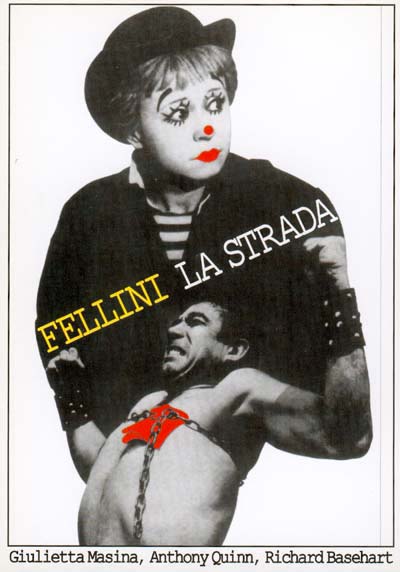
la strada


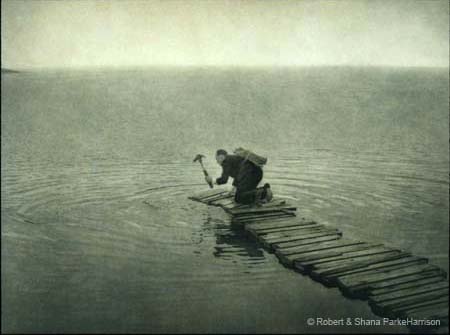
a memória (corrompida) falava de luminosidade e redenção, mas não, gelsomina não ganhou asas e as correntes afinal esmagaram o peito de zampanó

segunda-feira, março 13, 2006

do espiritual na arte (# 06)


pedro cabrita reis, the passage oh the hours, 2004


pedro cabrita reis, absent names, 2003


(excerto de uma entrevista de adrian searle a pedro cabrita reis / www.pedrocabritareis.com)

PCR: Well… I am a gatherer of memories, mostly.
AS: Yours or other people’s?
PCR: Good question. Mine eventually, because everything I work with becomes my experience. It comes to me through memories, sounds, lost things, shadows. I am a gatherer of mysteries, signs of passage… It is like if you are in a hurricane, which is sucking up all the shit: houses, roofs, cars. And when the wind stops it deposits all this stuff and goes off somewhere else, leaving behind what looks like a chaotic archaeological site… which we will reconstruct and shape again and again. Why worry about who made this or that or whom does that belong to? My work has to do with things being unique to one person. It’s about how to remain or what will remain. Survival? Order after chaos? Trying to make sense? A deep, profound desire to maintain one’s self alive, perhaps.

(…)

AS: Why do you think this kind of subject matter has become such a preoccupation? One can trace this focus on architecture through so many artists’ work of the past half century.

PCR: Because nature has disappeared as a reference. We have lost it within ourselves to such a point that we came to the moment where the exercise of architecture is the only form that makes the world comprehensible. After all, architecture is more about defining territories then actually building houses. Being an artist, what I do evolves around architecture as a mental discipline or an exercise of reality, since it’s impossible even to look at a tree without considering it as a part of an elevation that includes my shadow, the line of the horizon, the space between both and the drawing of the steps or of the walk in between those points. And then again here we are talking about space, wich is again architecture, which leads us both to the loss of Nature and – why not? – to the fall of God. It has always been, as it were, against the trees. The world is meaningless unless you define it through a drawing. We have to shape the form of the world.

AS: It is difficult to think of this without feelings of loss and sadness, about nature and our place within it.

PCR: I would say that melancholia is the word we are missing here. Melancholia considered as the condition of being deprived of an external image of the self. Having lost the comfortable reassurance of being part of Nature, we are only left with the perception of the self. And this knowledge implies the drawing of a territory, shall I say an exercise of architecture, an assumption of a self that builds a sense of place. Shaping a form of a wall, opening doors and windows in it, is how one can deal with the landscape which is difficult to be perceived if not through the intersection of a line with another line. Those two create a space where the projection of our shadow is the measuring tool. Or, if you prefer, the reference of a finally regained unity.

AS: I understand your work as not about revolutionary gestures and schism, but about continuities.

PCR: The loss of nature is a wound, still, or forever, to be closed. To be healed. Only artists can do it; in a manner, I suppose, very desperate. I’m not interested in the ephemeral brilliance of those moments of rupture. Instead, I’m further more interested or implied in a gesture of re-building. I’m more interested in the act of doing. Putting things together, establishing a place of memory as an ability to construct. Memory as opposite to nostalgia. I would like my work to be referred to as an inner space of silence, introspection, serenity. Most of all it’s about the inevitable quest for beauty, as a form of absolute inteligence.
(…)

sexta-feira, março 10, 2006

paris, texas


2004

às vezes uma pessoa tem de emudecer


testing


Your scored -6 on the Moral Order axis and 5.5 on the Moral Rules axis.

Matches

The following items best match your score:

  1. System: Socialism
  2. Variation: Extreme Socialism
  3. Ideologies: International Socialism, Activism
  4. US Parties: No match.
  5. Presidents: Jimmy Carter (74.14%)
  6. 2004 Election Candidates: Ralph Nader (80.11%), John Kerry (64.30%), George W. Bush (32.79%)

Statistics

Of the 167169 people who took the test:

  1. 0.2% had the same score as you.
  2. 5.7% were above you on the chart.
  3. 93% were below you on the chart.
  4. 88.4% were to your right on the chart.
  5. 2.2% were to your left on the chart.


quarta-feira, janeiro 04, 2006

tactear para ver no escuro IV


2000


os mais valentes - vão a tactear
e às vezes chocam contra uma árvore/mesmo na testa -
mas aprendem a ver
(emily dickinson)

segunda-feira, dezembro 05, 2005

unos cuantos piquetitos *


nunca conseguirei juntar-te toda / 1998


bilbau/2003


img da exposição world press photo 05

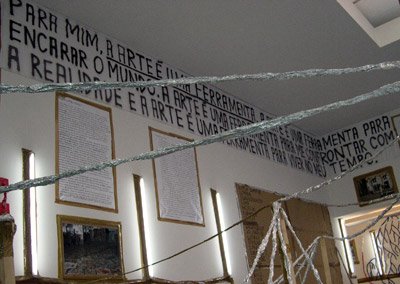
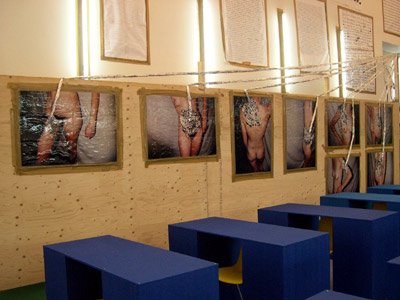
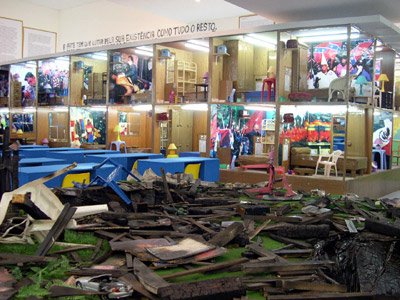
img da exposição anschool II / thomas hirschhorn

(* título de uma obra de Frida Kahlo)

quinta-feira, novembro 03, 2005

a gralha negra em tempo de chuva*

Lá no alto, num ramo firme
arqueia-se uma gralha negra toda molhada
arranjando e voltando a arranjar as penas à chuva.
Não espero qualquer milagre
nem nada

que venha lançar lançar fogo à paisagem
no interior dos meus olhos, nem procuro
mais no tempo inconstante qualquer desígnio,
mas deixo as folhas manchadas cair conforme caem,
sem cerimónia ou maravilha.

Embora - admito-o - deseje
ocasionalmente alguma resposta
do céu mudo, não posso honestamente queixar-me:
uma certa luz pode ainda
surgir incandescente

da mesa da cozinha ou da cadeira
como se um fogo celestial tornasse
seu, de um instante para outro, os mais estranhos objectos,
assim consagrando um intervalo
de outro modo inconsequente

por nos dar grandeza e glória,
ou até amor. De qualquer modo, caminho agora
atenta (pois isso poderia acontecer
mesmo nesta paisagem triste e arruinada); descrente,
mas astuta, ignorante

de que um anjo se decida a resplandecer
repentinamente a meu lado. Apenas sei que uma gralha
ordenando as suas penas negras pode brilhar
de tal maneira que prenda a minha atenção, erga
as minhas pálpebras, e conceda

um breve repouso com medo
de uma neutralidade total. Com sorte,
viajando teimosamente por esta estação
de fadiga, acabarei
por juntar um conjunto

de coisas. Os milagres acontecem
se gostares de invocar aqueles espasmódicos
gestos de luminosos milagres. A espera recomeçou de novo,
a longa espera pelo anjo,
por essa rara, fortuita visita.

*/sylvia plath

segunda-feira, outubro 24, 2005

para elsinore


1

Cheirava a mar em Elsinore
Um leve cheiro a mar misturado
Com o aroma primaveril de ervas e arvoredo

O castelo fora por vezes reconstruído
E uma vez purificado pelo fogo
Tudo fora lavado e pintado
Passado a limpo e exorcizado

No entanto
Numa das salas do castelo
Um quadro do século dezoito mostrava
Uma rainha bela imperiosa arrogante
E no seu rosto a sombra de outro se espelhava
E também as muralhas vermelhas de tijolo
sobre as águas obscuras do fosso projectavam
Uma sombra muito antiga e cor de sangue

2
Cá fora o mar era de um azul claríssimo
Crianças brincavam na relva à luz do sol
E famílias felizes de perto as olhavam
Porém a guia disse que o passado mora do outro lado do castelo
E que o pano só sobe depois do sol descer
E que as palavras só se cruzam como facas
Quando soa a hora em que se embruxa a noite

Eu entre barco e avião cheguei desencontrada
Nada vi da profunda e visionária noite

(sophia de mello breyner)

sábado, outubro 15, 2005

a condição humana


saraband, ingmar bergman, 2004

sob a luz de bergman tudo se depura e ficamo-nos a olhar fascinados e comovidos